How Beanbags Coworking Space is Revolutionizing Small City Workspaces: An Interview with the Minds Behind the Startup

A coworking space can be a dream come true for anyone seeking a peaceful workspace where they can complete their pending tasks and interact with individuals from diverse backgrounds. It provides a peaceful environment to meet deadlines and accomplish work-related goals (and offers great coffee in case your best ideas need a wake-up call).
Three young minds from Sialkot, Roshanay Asif Sheikh, Ali Hashmi, and Abeer Khalid Hayat, came up with the idea of starting the first coworking space in the city of Sialkot, Pakistan. This was a revolutionary idea as the town didn’t have any such workspace for people yet. Since its inception, it has seen success and generated great revenue.
This feature will walk you through this revolutionary coworking space in Sialkot and let you know the inspiration followed by the young founders.
Bringing a Metropolitan Idea to a Small City
The origin story of Beanbags Coworking Space is pretty interesting. It’s the brainchild of Roshanay, who wanted to bring something distinct to her hometown. After studying in a metropolitan like Lahore for around four years, she was determined to bring the concept of a coworking space to Sialkot as well.
However, being an unconventional idea for a small town, working on it wasn’t easy. Developing the idea took the founders as many as four to five months. Initially, it appeared to be an unhackneyed and imaginative idea to those who heard it. But, as things went ahead, the founders were able to bring about tangible results.
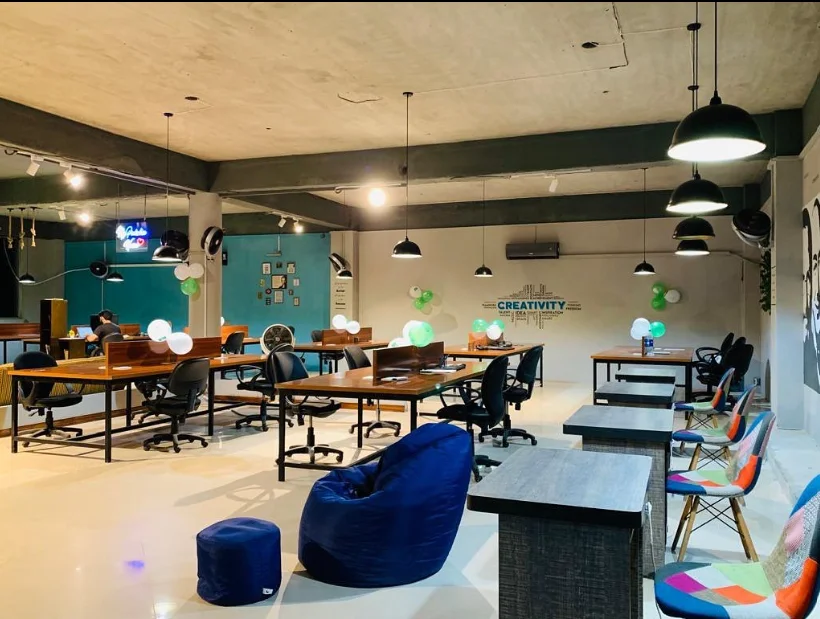
Beanbags Coworking Space with its modern, comfortable, and well-lit workstations.
Being Aware of the Distinctiveness
What made things possible was the fact that the founders were already aware of the newness this idea came with. It was evident that the process of creating a positive attitude towards a coworking space would be quite a task. The founders went ahead with the project by knowing the struggle it would take to conceptualize the idea and make it a reality in the city. Now that’s some serious go-getter attitude!
The three young entrepreneurs had to actually put in double the effort while starting off the company as the idea was conceived during the Covid period. This was also the time when the company started, which is why the research, planning, and actions put into turning this idea into reality were a little more challenging than they could have been otherwise. Roshanay Asif Sheikh, the startup’s co-founder and director says they initiated the company with a setup for around twenty people only.
Who’s the Target Customer?
The company’s primary client base includes freelancers that would work from home but can’t find a suitable environment to do so. At the same time, small teams that require feasible meeting places would choose this space to get their work done.
But how did the company find these clients? Well, for that, the small startup team had some surveys to check out the availability of potential clients in the area. Once these surveys were done, the management team devised varied marketing strategies to get their clients to know about the presence of a coworking space in the city. While spilling the tips for growth, the entrepreneurs said that it’s crucial to be well aware of clients’ needs and then offer them everything they look for. This way, it gets easier to retain clients.
Three Founders; One Decision
Is it effortless for the three partners to reach a decision amicably? The founders come up with a great answer to this question. For them, they are partners first and friends later. Hence, they make sure to come up with the right solutions to problems without being too considerate towards each other.
The founders extended the startup from a smaller space to a larger space. As discussed above, the company had around twenty people in the space when it started. However, now it has the ability to host bigger teams in its coworking space which is the testimony of the startup’s success in itself.
Expansion with PITB
A great opportunity that the company got in the last year was when PTIB, Punjab Information Technology Board, contacted it. They connected with the startup and pledged to help it expand. PITB wanted to provide subsidized rates to freelancers by opening coworking spaces that would promote the remote work setup in the country. To work on this project, the startup bought two more spaces of sixteen marlas each to ensure a bigger hub of working. Also, the location was chosen to be in the middle of the economic activity, warranting a better opportunity for the corporate teams to collaborate with each other at the Beanbags Coworking Space.
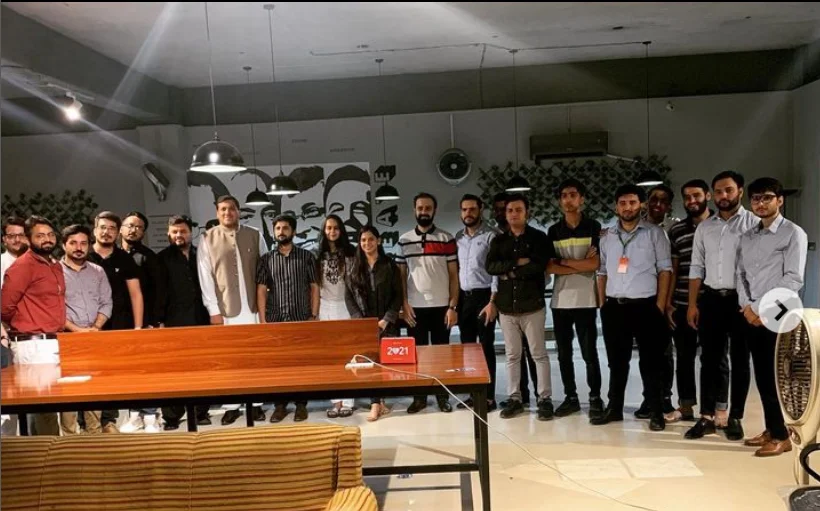
PITB visiting Beanbag Coworking Space in Sialkot
The Chamber of Commerce being close to the working space of this startup also helped. The Chamber also aids the company whenever there is a need for some data or other information.
Augmented Capacity
Owing to this expansion of the startup, the space enhances multifold. This is why the company currently has a 30% of space utilization of capacity, where most working members are freelancers. However, customer acquisition is slowly growing, mainly through the aggressive marketing campaigns utilized by the team.

Abeer Hayat and Ali Hashmi, co-founders of Beanbags Coworking Space
Marketing Strategies and their Impact
As this was a new idea, the company had to develop distinct marketing strategies. This is why the founders opted for both digital and conventional marketing ideas to inform people about the new coworking space. Facebook pages and Instagram campaigns were a crucial part of digital marketing. At the same time, flyers, brochures, and pamphlets were used as a part of conventional marketing.
Regarding the legal requirements connected to initiating a startup, the fact that one of the co-founders, Roshanay Asif Sheikh, already had a business and the legal team associated with it took care of the legal matters. The requirements of the Federal Board of Revenue are also managed by it efficiently. Even the initial startup funding was organized with the help of revenue generated by this successful business, and the owner later added two more members to the founding team.
Lessons Learnt
But what about the lessons you have learned in these years of entrepreneurship? According to the founders, tough times have taught them that there are two crucial elements to running a business successfully: making decisions at the right time and knowing how to handle the pressure efficiently. These two skills are key in helping an idea become one of the startup success stories that help others find a direction.
